Demolition Debris Removal and Hauling in Fort Worth, TX
A finished demolition is not actually finished until the material is gone, sorted properly and disposed of the right way, not just piled at the curb or dumped wherever is convenient. Debris removal is built into every project we do, and this page walks through what that actually involves.
It Does Not All Go to the Same Place
Demolition debris is not one uniform pile of trash, even though it can look that way once a structure is down. Concrete and masonry, wood framing, metal, drywall, roofing material and general mixed debris all get handled a little differently depending on what they are and where they can actually go.
Part of our process is sorting this material rather than treating everything the same way, both because it is the right way to handle it and because it genuinely affects cost and what can be recycled versus what has to be landfilled.
Construction Debris Has Its Own Kind of Landfill
Most people assume demolition debris goes to the same landfill as household garbage. It does not, at least not properly. Construction and demolition debris in Texas is regulated separately under state solid waste rules, and it is generally required to go to a facility specifically permitted to accept that kind of material, sometimes referred to as a Type IV landfill, rather than a standard municipal solid waste site. Tarrant County has facilities set up specifically for this category of waste, including sites that accept concrete, construction debris and scrap metal for recycling and disposal.
This distinction matters more than it sounds like it should. Debris that ends up in the wrong place, or worse, dumped somewhere it was never supposed to go at all, is a real problem in this industry, and it is exactly the kind of shortcut that gives some demolition operators a bad reputation.
Get Your Free Quote
Tell us about your project and we will follow up shortly.
A Real Amount of This Material Does Not Have to Be Waste at All
Concrete and asphalt are commonly crushed and recycled into aggregate or new paving material rather than landfilled outright. Metal, whether it is structural steel, roofing, or old fixtures, has real scrap value and gets pulled out and recycled rather than treated as waste. Even wood, when it is clean and untreated, can sometimes be diverted rather than landfilled depending on the project and what is available at the time.
This is not just an environmental talking point for us. Construction and demolition debris makes up a real share of what actually gets landfilled in Texas each year, and diverting what can genuinely be recycled matters both for the environment and, in some cases, for what a project actually costs. We sort with this in mind rather than defaulting to landfilling everything because it is easier.
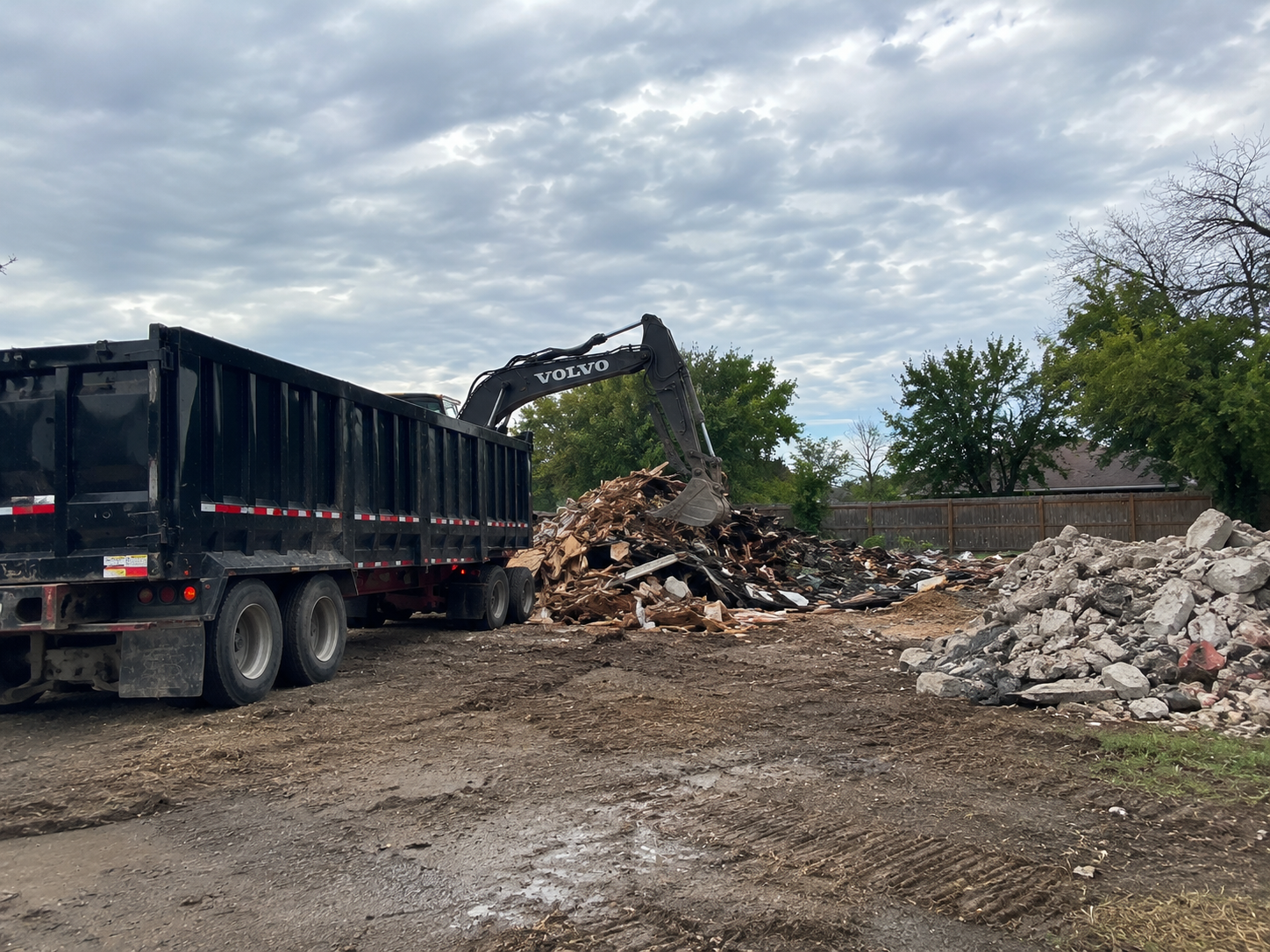
Not Every Truck Doing This Is Doing It Properly
Texas regulates who can legally transport construction and demolition debris, particularly when it is being hauled in enclosed containers or vehicles to a permitted landfill. Legitimate haulers operate under this framework. The demolition industry, unfairly or not, has a real reputation problem around debris occasionally ending up somewhere it should not, an empty lot, an easement, wherever is quickest and cheapest for whoever is hauling it. That reputation exists because it does happen, and it happens more with operators cutting corners than with ones actually following the rules.
We are not telling you this to scare you, we are telling you because it is a completely reasonable thing to ask about before hiring anyone for demolition work, us included. Where does the debris actually go, and can you tell me that honestly. We can.
How Debris Removal Fits Into the Bigger Picture
On most projects, debris removal is not a separate visit that happens days later, it is built into the demolition process itself. Material gets sorted as the structure comes down where practical, staged for hauling, and removed as the project progresses rather than left in a growing pile until the very end.
For larger projects, this often means a roll off container or similar staging on site. If that container needs to sit within the public right of way rather than entirely on your property, that can require its own street use permit through the city, which we handle if your specific project calls for it.
Some Things Get Handled Differently, on Purpose
Not everything that comes out of a demolition project is treated the same as ordinary debris. Materials like asbestos, when present, require specific notification and disposal at facilities permitted to accept them, which is why we address that as part of scoping projects where it could realistically be a factor, covered in more detail on our residential, commercial and interior demolition pages. Whatever the material, the goal is the same, handle it the way it is actually supposed to be handled, not the way that is fastest.
It Is Priced Into the Project, Not Bolted On Afterward
Hauling and disposal costs are generally built into the overall project price rather than presented as a surprise line item once demolition is finished.
- The volume and weight of material involved.
- The mix of what is recyclable versus what has to be landfilled.
- How far material needs to travel to reach an appropriate facility.
Larger projects naturally involve more material and more trips, which is part of why we scope this at the same time we scope the demolition itself rather than treating it as an afterthought.
How Debris Actually Moves Off Your Property
-
1
Step One
VolumeAssessment
We estimate the amount and type of material involved as part of scoping the overall project, not as a separate quote later.
-
2
Step Two
Sorting
Material is separated where practical, concrete, metal, wood, and general debris, both during and after demolition.
-
3
Step Three
Staging
Debris is staged for removal, using containers on site when the project calls for it, with any necessary street use permit handled if the container needs to sit in the public right of way.
-
4
Step Four
Transport
Material is hauled to the appropriate facility for its type, a construction and demolition permitted site for most material, and a specifically permitted facility for anything requiring special handling.
-
5
Step Five
SiteClean Up
Once material is gone, the site is left genuinely clear, not just clear of the largest pieces.
Related Services
This is not really a standalone service so much as a part of everything else we handle. For more on the specific projects this connects to:
Debris Removal Questions We Hear Often
It is included as part of the overall project scope, not added as a surprise charge once demolition is finished.
Most material goes to a facility specifically permitted for construction and demolition debris, separate from a standard household waste landfill. Material with real recycling value, like concrete and metal, is diverted for recycling where practical.
Not everything can be recycled, but a meaningful share of most projects can be, particularly concrete, asphalt and metal. What cannot be recycled is disposed of properly at an appropriately permitted facility.
Depending on the project, a container may be staged on site during work. If it needs to sit in the street or right of way rather than entirely on your property, that typically requires a separate permit, which we handle when it applies.
For most projects, it happens alongside the demolition itself rather than as a separate phase afterward, so it does not usually add significant time on its own.
Those are identified and handled separately from general debris, with proper notification and disposal at facilities permitted to accept them, as covered on the relevant service pages for your specific project type.
Have Questions About Where Your Debris Actually Goes?
That is a completely fair question to ask before hiring anyone. Call us and we will give you a straightforward answer, along with a real quote for your project.
Get Your Free Quote
Tell us about your project and we will follow up shortly.